
What to Say When a Conversation Becomes Awkward

Knowing what to say when a conversation becomes awkward can turn a stressful moment into a normal one.
You’re talking to someone, and suddenly the conversation goes quiet.
You start wondering what to say next. Should you ask another question? Change the topic? Say something funny?
That small moment can feel much more awkward than it actually is.
The good news is, you don’t need a perfect response to keep a conversation going. A simple question, a genuine reaction, or a comment about what’s happening around you can be enough.
Learning what to say when a conversation becomes awkward doesn’t require memorizing scripts — just a few simple habits.
If you also want to get better at starting conversations in the first place, this guide on [How to Start a Conversation Naturally] can help.
Here are some practical ways to handle those awkward moments without overthinking them.
Table of Contents
Why Conversations Become Awkward
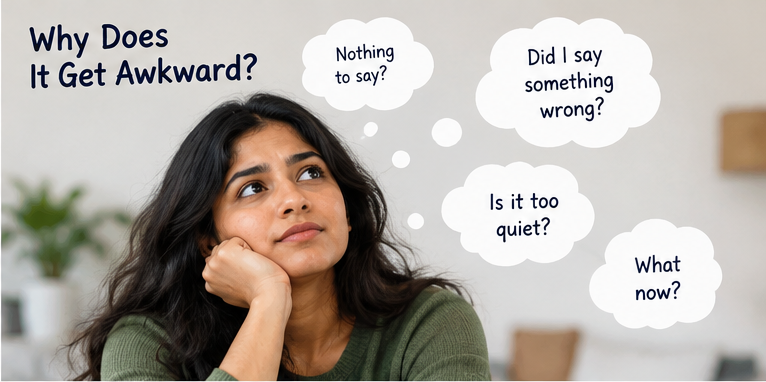
Sometimes a conversation becomes awkward simply because both people are trying to think of what to say next.
You might start wondering:
- “What should I say now?”
- “What if they think I’m boring?”
- “Why did the conversation suddenly stop?”
- “Should I change the topic?”
The more you think about these questions, the harder it can become to respond naturally.
Another reason is that we often expect conversations to flow perfectly. But real conversations have pauses, short answers, topic changes, and moments when neither person knows what to say.
An awkward moment doesn’t mean you’ve had a bad conversation. It’s just a normal part of talking to people.
Don’t Panic When There Is Silence
A few seconds of silence can feel much longer when you’re the one experiencing it.
Research from the University of Groningen found that even a brief 4-second silence in a conversation can make people feel a stronger sense of rejection than they realize.
You might immediately think:
“This is awkward. I need to say something.”
But you don’t have to fill every quiet moment.
Sometimes the other person is simply thinking about what to say. They may be checking their phone, looking around, or taking a moment to respond.
Instead of rushing to fill the silence, take a breath and give the conversation a little space.
If the silence continues, you can restart the conversation with something simple:
“By the way, how did you get into this kind of work?”
“Have you been here before?”
“Speaking of that, have you watched anything good lately?”
Silence is one of the most common moments where people freeze and don’t know what to say when a conversation becomes awkward.
A short pause doesn’t mean the conversation is failing. You can take a moment, then continue naturally.
Once you understand why this happens, it becomes much easier to know what to say when a conversation becomes awkward.
Use the Last Thing They Said
When you don’t know what to say next, you don’t always need a new topic.
Pay attention to the last thing the other person mentioned. It can give you an easy way to continue the conversation.
For example, they might say:
“I’ve been trying to get back into running.”
Instead of changing the subject, you could ask:
“How did you get started?”
Or:
“Do you usually run in the morning or evening?”
You can also share a small part of your own experience:
“I’ve been trying to exercise more too. It’s harder to stay consistent than I expected.”
This makes the conversation feel more natural because you’re responding to what they actually said.
You don’t need to prepare dozens of questions. Sometimes the best next question is already in the conversation.
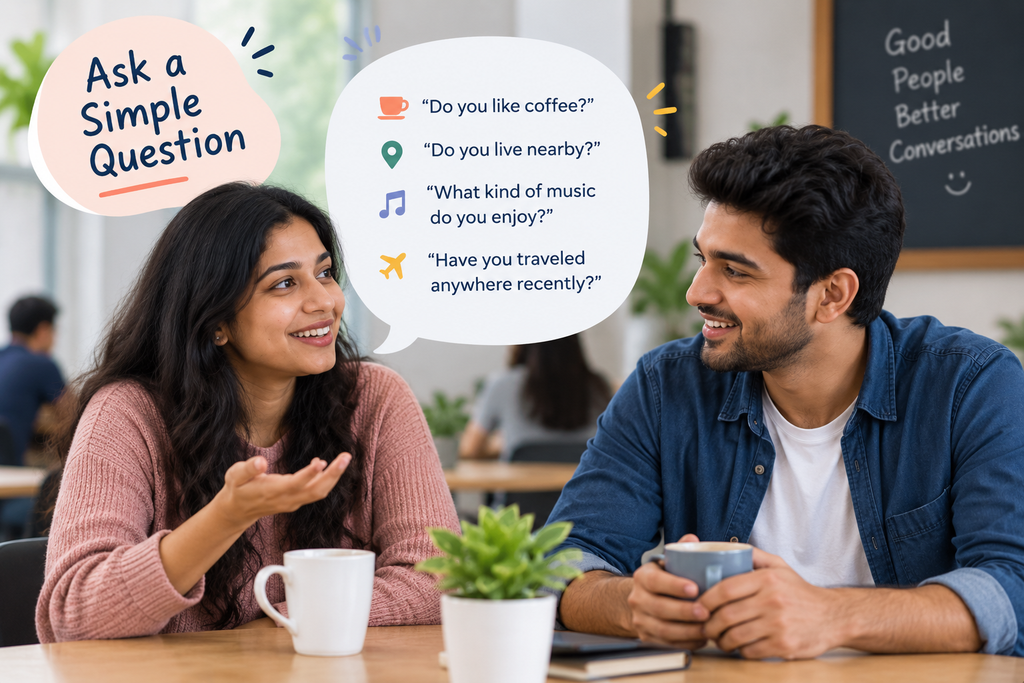
Ask a Simple Follow-Up Question
A conversation can become awkward when you ask a question and then don’t know what to say after the answer.
The easiest way to avoid this is to ask a simple follow-up question based on what they just said.
For example:
“I started learning photography recently.”
You could ask:
“What made you interested in photography?”
Or:
“What kind of photos do you like taking?”
You can also respond first and then ask:
“That sounds interesting. How long have you been doing it?”
A follow-up question shows that you’re actually listening instead of simply waiting for your turn to speak.
The best follow-up questions come from genuine curiosity, not from trying to keep the conversation alive at any cost.
A good follow-up question is often the simplest way to figure out what to say when a conversation becomes awkward.
Share Something About Yourself
A conversation doesn’t have to be a series of questions.
If you only keep asking questions, the other person may feel like they’re being interviewed. Instead, share something small about yourself when it fits naturally.
For example:
“I’ve been trying new cafés lately. Do you have a favourite one?”
Or:
“I recently started learning photography. What kind of hobbies are you into?”
Sharing something about yourself gives the other person another way to respond and can help you find something you have in common.
Good conversations are usually a two-way exchange, not a question-and-answer session.Share Something About Yourself
What to Say When You Don’t Know What to Say
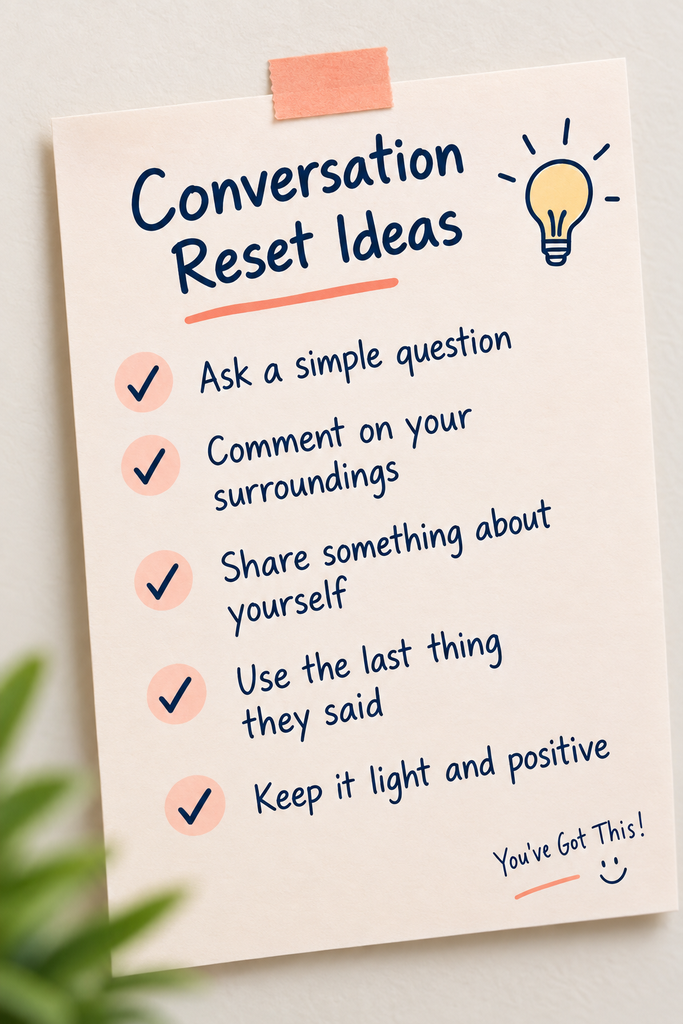
Sometimes you genuinely have no idea what to say next. That’s okay. You can use a few simple conversation resets instead of putting pressure on yourself to be interesting.
Try one of these:
Ask About Something They Mentioned
“You said you recently moved here. How are you finding the place so far?”
Comment on What’s Happening Around You
“This place is busier than I expected today.”
Share Something Small
“I’ve been looking for good places to eat around here lately.”
Change the Topic Naturally
“By the way, have you watched anything good recently?”
You don’t need to use these lines word-for-word. Use them as starting points and adapt them to the situation.
What If the Conversation Still Feels Awkward?
Sometimes you try a question, make a comment, or change the topic, and the conversation still doesn’t feel natural.
That’s okay.
You don’t have to turn every interaction into a long or interesting conversation.
If the other person keeps giving short answers, avoids eye contact, or seems distracted, they may simply not feel like talking at that moment.
You can end the conversation politely:
“It was nice talking to you. I’ll see you around.”
Or:
“I’ll let you get back to what you were doing. Nice talking to you.”
Knowing when to step back is also part of being good at conversations.
A conversation doesn’t have to be perfect to be a positive interaction.
Even experienced conversationalists sometimes struggle with what to say when a conversation becomes awkward — it’s a completely normal skill to keep practicing.
Common Conversation Mistakes That Make Things More Awkward
When a conversation feels awkward, it’s easy to try too hard to fix it. But some common habits can actually make the situation more uncomfortable.
Trying to fill every silence
You don’t need to talk continuously. A short pause is normal.
Asking too many questions
If you keep asking questions without sharing anything yourself, the conversation can feel like an interview.
Overthinking every response
You don’t need to find the perfect thing to say. A simple, genuine response is usually enough.
Overthinking every response is closely tied to [why you keep replaying conversations in your head] after they’re over.
Forcing a conversation
If someone gives very short answers or seems distracted, don’t keep pushing. Give them space.
Trying too hard to be interesting
You don’t need impressive stories or clever lines. Being curious, relaxed, and willing to listen matters more.
The goal isn’t to make every conversation perfect. It’s to make the interaction feel natural and comfortable.
Avoiding these habits makes it much easier to know what to say when a conversation becomes awkward.
Keeping these small habits in mind makes it much easier to figure out what to say when a conversation becomes awkward.
A Simple 3-Step Reset
When a conversation suddenly feels awkward, remember this simple reset:
This 3-step reset is a simple way to remember what to say when a conversation becomes awkward.
1. Pause
Take a breath instead of rushing to say something.
2. Notice
Pay attention to what the other person just said, what is happening around you, or what you were already discussing.
3. Respond
Ask a follow-up question, share a small thought, or naturally change the topic.
For example, if someone says, “I’ve been really busy with work lately,” you could respond:
“What has been keeping you busy?”
Or share your own experience:
“I know that feeling. I’ve had a pretty busy week too.”
Pause. Notice. Respond. That’s often enough to get a conversation moving again.
A 5-Minute Practice Exercise You Can Try Today
If you want to become more comfortable handling awkward moments, practice in small situations instead of waiting for the perfect opportunity.
Try this simple exercise today:
Minute 1: Think of three simple questions you could ask someone.
Minutes 2–3: Start a short conversation with someone you already interact with, such as a colleague, classmate, neighbour, or shopkeeper.
Minute 4: Pay attention to one thing they say and ask a follow-up question about it.
Minute 5: Notice how the conversation felt. Don’t judge whether it was “good” or “bad.” Just notice what worked and what you could try differently next time.
You don’t need to become a great conversationalist overnight.
Small conversations repeated regularly can make talking to people feel much more natural over time.
Final Takeaway
Now you have several simple ways to handle what to say when a conversation becomes awkward, without overthinking it.
Awkward moments are a normal part of having conversations. You don’t need to eliminate every pause or always know exactly what to say.
When a conversation becomes uncomfortable, slow down and focus on the person in front of you. Listen to what they said, ask a simple follow-up question, share something about yourself, or change the topic naturally.
And if the conversation still doesn’t flow, that’s okay. Not every conversation needs to become a long one.
The more you practice having simple, real conversations, the less pressure you’ll feel to say the perfect thing.
You don’t need perfect words. You just need a natural next step.